 English
 عربي
عربي
 Español



Selecting the right paperboard grade is one of the most consequential decisions in packaging design. The wrong choice can compromise print quality, structural integrity, shelf appeal, and cost efficiency simultaneously. Among the most widely specified grades in the global packaging industry are High-loft GC1, GC2, Folding Box Board (FBB), Coated One Side (C1S), and Ivory cardboard—each engineered for distinct performance requirements and end-use scenarios. Understanding the structural differences and practical application windows of each grade allows brand owners, packaging engineers, and print buyers to make better-informed sourcing decisions. This article provides a detailed breakdown of where and why each grade is used in real-world packaging applications.
Understanding the Structural Basis of Each Board Grade
Before exploring applications, it is important to understand what distinguishes these grades structurally. All five grades belong to the broader category of coated paperboard, but they differ significantly in furnish composition, layer construction, bulk, and surface treatment.
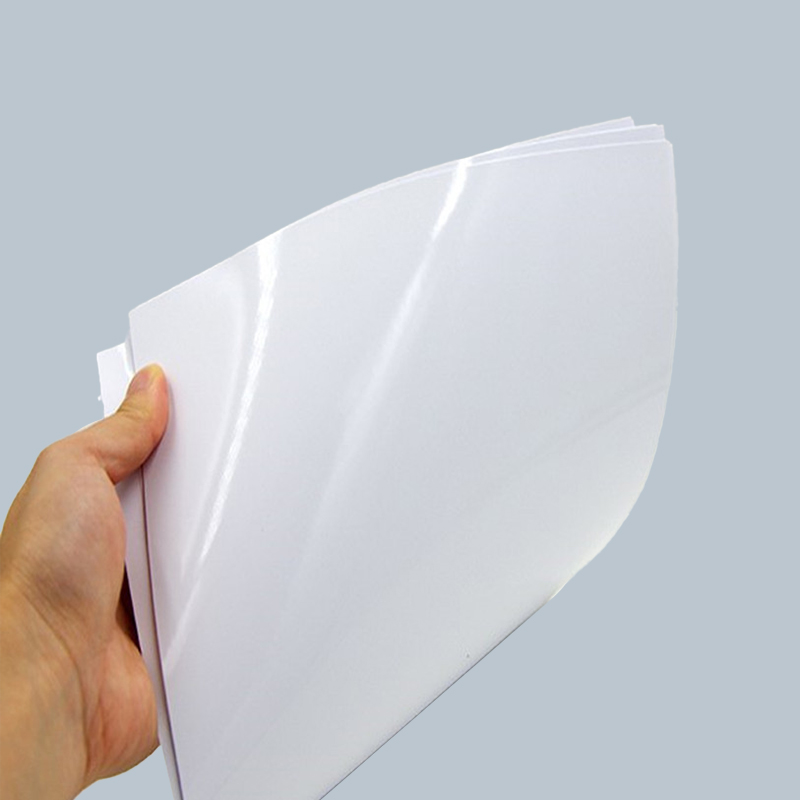
GC1 and GC2 are solid bleached sulfate (SBS) boards—manufactured entirely from virgin chemical pulp with a fully bleached white reverse side. GC1 is the premium tier, offering superior stiffness-to-weight ratio and surface quality, while GC2 is a slightly lower-specification SBS board with a minimally coated or uncoated reverse. High-loft variants of GC1 and GC2 incorporate a low-density, bulky fiber structure that increases caliper without adding proportional weight, improving stiffness and rigidity efficiency. FBB (Folding Box Board) is a multilayer board combining a mechanical pulp middle layer sandwiched between chemical pulp outer layers, delivering high bulk and stiffness at lower grammages. C1S (Coated One Side) is typically a kraft- or chemical pulp-based board coated on one face only, leaving the reverse uncoated. Ivory board is a dense, uniformly bleached multi-ply board valued for its smooth surface, consistent caliper, and premium appearance.
High-Loft GC1: Premium Applications Demanding the Highest Surface Quality
High-loft GC1 is the grade of choice when brand presentation, print fidelity, and product safety converge as top priorities. Its fully bleached construction—both on the face and reverse—makes it suitable for direct food contact applications, a critical regulatory requirement in many markets. The high-loft structure provides exceptional stiffness relative to grammage, which translates into a rigid, premium-feel carton that resists distortion during filling, transport, and retail display.
In practice, High-loft GC1 is predominantly specified for the following application categories:
- Pharmaceutical and healthcare packaging: Medicine cartons, blister pack sleeves, and OTC product boxes where purity, whiteness, and direct food/drug contact compliance are mandatory. The fully bleached virgin furnish ensures no odor migration, which is critical for drug stability and regulatory approval.
- Luxury food packaging: Premium chocolate boxes, confectionery cartons, and specialty tea or coffee packaging where the white reverse projects quality inside and out. The high gloss coated face supports photographic-quality printing and foil stamping.
- Cosmetics and personal care: High-end skincare, fragrance, and cosmetics cartons where the packaging itself is part of the brand value proposition. High-loft GC1 supports crisp embossing, UV varnish, and metallic inks without the ink absorption irregularities found in lower grades.
- Tobacco cartons: Cigarette and premium tobacco product packaging, where regulatory compliance for food-safe materials and high-volume print consistency are standard industry requirements.
GC2: Cost-Efficient Premium Packaging for Non-Direct Contact Uses
GC2 shares the same bleached virgin pulp face furnish as GC1 but features a less uniformly coated or uncoated reverse. This makes it slightly less suitable for applications where the inner surface will be directly visible or in contact with sensitive products, but it offers meaningful cost savings while maintaining excellent front-side print quality. The bulk characteristics of high-loft GC2 still deliver good stiffness efficiency, making it competitive for applications where pack rigidity is important but food-contact certification is not.
GC2 finds its natural application niche in mid-range consumer goods packaging—household product cartons, general FMCG secondary packaging, promotional gift boxes, and retail display packaging where front-face print quality must be maintained but cost pressures exist. It is also widely used in the toy and games industry, where the carton is the primary communication vehicle with the consumer but food contact compliance is irrelevant. For brand owners seeking SBS board performance without the premium associated with GC1, GC2 represents an efficient trade-off.
FBB (Folding Box Board): High Stiffness at Lower Grammage for Efficient Packaging
Folding Box Board is structurally distinct from GC grades in one critical way: its middle layer is manufactured from mechanical (groundwood or thermomechanical) pulp rather than chemical pulp. Mechanical pulp fibers are shorter and create a higher-bulk, lower-density structure that provides exceptional caliper—and therefore stiffness—at lower basis weights compared to SBS grades. This bulk advantage translates directly into material cost efficiency: a FBB carton at 270 gsm can achieve the stiffness of an SBS carton at 300 gsm or more.
FBB is particularly dominant in the following sectors:
- Food service and dry food packaging: Cereal boxes, cracker cartons, pasta packaging, and frozen food cartons benefit from FBB's stiffness-to-cost ratio and its acceptable food contact properties when properly coated or paired with an inner liner.
- Healthcare and OTC pharmaceutical secondary packaging: Where FDA or EU food contact grade is not required for the outer carton and cost efficiency is important in high-volume production, FBB delivers reliable performance at reduced material cost.
- Laundry, cleaning, and household product cartons: Detergent boxes, dishwasher tablet cartons, and tissue box overwraps that require structural rigidity for stacking on shelves and resistance to compression in transit.
- Large-format retail packaging: Electronics accessories, DIY product cartons, and hardware packaging where larger carton sizes benefit enormously from FBB's stiffness efficiency at scale.
One limitation of FBB worth noting is that its mechanical pulp core is prone to yellowing over time under UV exposure, which can be a concern for products with long shelf lives displayed under retail lighting. For long shelf-life applications in well-lit retail environments, brand owners may prefer SBS grades despite the cost premium.

C1S (Coated One Side): Purpose-Built for Single-Face Print Applications
C1S board is coated on one face only, leaving the reverse side with a natural uncoated texture. This construction is purpose-designed for applications where high-quality printing is needed on only one surface, and where the uncoated reverse provides functional advantages—such as better adhesive bonding, more natural appearance, or specific tactile qualities.
C1S boards are extensively used across several distinct application categories:
- Labels and flexible packaging overwraps: C1S is a standard substrate for pressure-sensitive labels, wrap-around labels for cans and bottles, and product identification labels where print clarity on the face is critical and the reverse must accept adhesive coating uniformly.
- Cups, plates, and food service disposables: C1S cup stock is the foundational material for hot and cold drink cups, where the coated exterior provides excellent ink receptivity for brand printing and the uncoated interior allows for PE extrusion coating or clay barrier application.
- Folding cartons where glue bonding is needed on the reverse: In automated carton assembly, the uncoated reverse of C1S provides better hot-melt and cold-glue adhesion than a fully coated surface, improving line efficiency and seal strength.
- Book covers and stationery: C1S is widely used for book cover boards, greeting cards, and promotional print materials where a premium printed face is desired alongside a writeable or uncoated reverse.
Ivory Cardboard: Premium Density and Smoothness for High-End Print and Specialty Uses
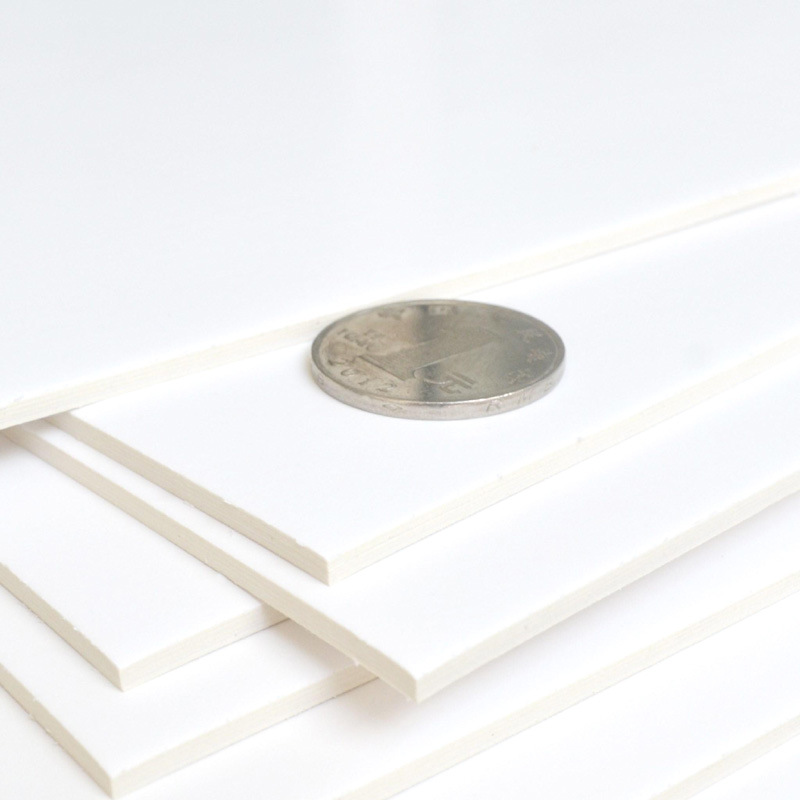
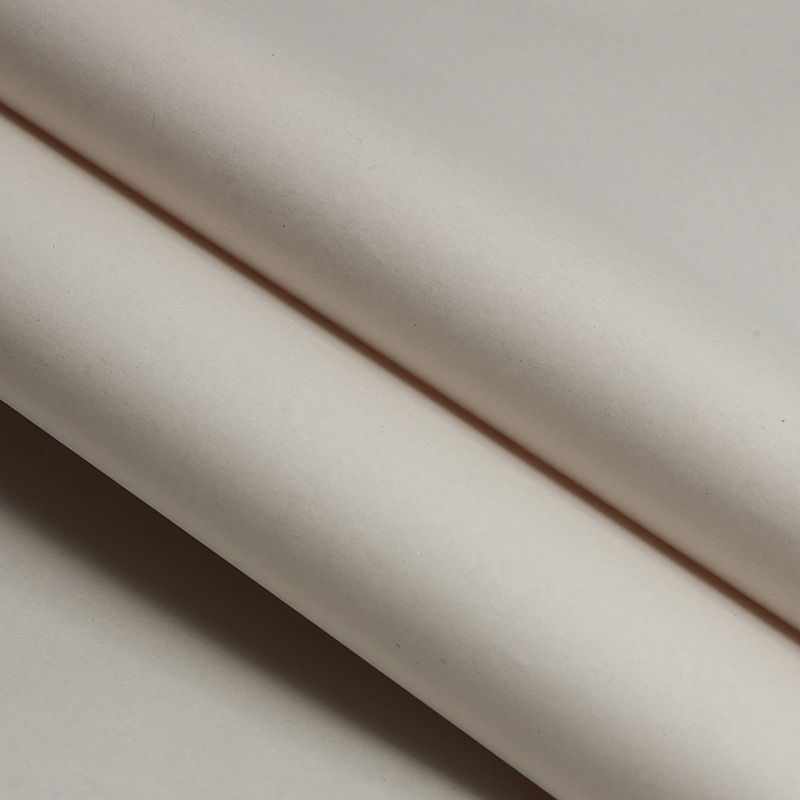
Ivory board is a multi-ply, fully bleached board manufactured from chemical pulp with a characteristically high density, smooth surface, consistent caliper, and clean white appearance. Unlike FBB, ivory board does not use mechanical pulp, making it more dimensionally stable and resistant to yellowing. It is heavier and denser than most SBS grades at equivalent caliper, which gives it a premium, substantial feel that is immediately perceptible when handled.
Ivory board is particularly well suited for applications where the physical quality of the substrate is as important as what is printed on it:
- Luxury retail packaging and gift boxes: High-density ivory board creates a substantial, premium-feeling rigid or semi-rigid box structure. Jewelry boxes, watch packaging, high-end gift sets, and luxury brand retail bags use ivory board for its weight and tactile quality.
- Business cards, invitations, and stationery: The smooth, dense surface of ivory board accepts fine detail printing, letterpress, engraving, and embossing exceptionally well, making it the substrate of choice for premium printed communications.
- Menus, certificates, and formal printed documents: Restaurants, hotels, financial institutions, and government entities specify ivory board for formal printed materials where the substrate itself communicates quality and authority.
- High-end cosmetics and fragrance packaging inserts: Inner trays, partitions, and display components inside luxury cosmetics boxes are often made from ivory board to maintain the premium sensory experience of unboxing.
Quick-Reference Comparison: Which Grade for Which Application?
The table below provides a practical reference for matching board grade to key application requirements:
| Board Grade | Key Structural Feature | Primary Application Fit | Food Contact Suitability |
| High-loft GC1 | SBS, bulky, white reverse | Pharma, luxury food, cosmetics, tobacco | Yes – direct contact approved |
| High-loft GC2 | SBS, bulky, minimal reverse coat | FMCG, toys, promotional packaging | Conditional – not direct contact |
| FBB | Mechanical pulp core, high bulk | Dry food, household, large retail cartons | Yes – with appropriate barrier |
| C1S | One coated face, uncoated reverse | Labels, cups, book covers, glued cartons | Depends on grade specification |
| Ivory Board | Multi-ply, dense, smooth surface | Luxury packaging, stationery, formal print | Grade-dependent – verify supplier |
Factors to Consider When Specifying Between These Grades
Choosing between High-loft GC1, GC2, FBB, C1S, and Ivory board requires a structured evaluation of several interdependent variables. Print specification is often the starting point: applications requiring fine screen printing, photographic reproduction, or specialty finishes such as soft-touch lamination, spot UV, and foil blocking demand the superior ink receptivity and surface smoothness of GC1 or Ivory board. For jobs where print quality is important but not at a luxury level, GC2 or FBB are typically sufficient.
Regulatory requirements impose hard constraints that override cost considerations. Any application involving direct contact with food, pharmaceutical products, or food contact packaging must verify that the specified board meets relevant standards such as FDA 21 CFR, EU Regulation 10/2011, or BfR recommendations. Only GC1 and specific FBB grades routinely carry direct food contact certification across major markets; C1S and GC2 may require additional testing or barrier treatments.
Structural performance—particularly stiffness, bending resistance, and compression strength—determines which grade can sustain the mechanical demands of filling lines, transport stacking, and retail display. High-loft GC1 and FBB both deliver excellent stiffness efficiency for their respective weight categories, while Ivory board offers maximum rigidity through density. For oversized cartons or shelf-facing retail applications with high stack loads, FBB's bulk advantage often makes it the most cost-effective structural choice. Ultimately, a clear brief covering print requirements, regulatory obligations, structural targets, sustainability goals, and budget will consistently point toward the correct grade—and in many packaging programs, different grades are specified simultaneously for different components within the same product range.